

Lone Worker Protection – Devices, Alarms & Monitoring

With 50 years of experience in personal alarm systems, COBS believes that safety isn’t only about what happens when something goes wrong. It is about creating a secure space and the opportunity to work safely every day. With personal alarm systems and lone worker devices, these employees may still be working on their own, but safety is just one button press, or movement, away. Even in the worst possible moments, the user can focus on tackling the situation at hand rather than worrying whether help is on its way or not.
Organizations have a duty to provide lone worker protection for their employees, yet not all organizations are aware of the safety risks involved in their work environment. When we hear the term “lone worker,” we often think of night staff or technicians out in the field. However, lone work is a lot more common than what is perceived at first glance.
In this article, we will cover what lone work entails and how organizations can work toward a more secure environment for their employees.
Lone working includes, among others:
- A prison officer speaking with a client
- A caretaker in an elderly care home
- A janitor in an empty building
- A nurse on their way between patients
- A store employee locking up for the day
- A data center technician
- A front desk employee
What is common among all these employees is that they don’t always have help within sight or hearing range.
What is a Lone Worker Device?
A lone worker device is a portable alarm device that employees working alone can use to quickly and efficiently call for help and be located. The user is primarily able to send alarms, but may also communicate with colleagues or security directly, and be monitored in case of an incident.
What makes lone worker devices stand out from regular personal alarm systems is that they offer multiple features to ensure safety in any type of incident. This may include precise locationing, man-down, running alarms, or simply just logging activities for the team to be aware of. Through different kinds of programmed buttons, the user can quickly communicate their needs, whether or not it is urgent.
How COBS Lone Worker Solutions Work
COBS lone worker solutions typically operate in five simple steps; from the alarm being triggered to confirmation and help arriving moments later.

Lone Worker Device Features
| Device | A-Pager | PAL+ | CS35p | CS37p | FC4Ex | Stellar PS-Pager | Versity |
|---|---|---|---|---|---|---|---|
| Physical intuitive panic alarm button | Yes | Yes | Yes | Yes | Yes | Yes | Yes |
| Precise indoor locationing | Yes | Yes | Yes | Yes | Yes | Yes | Yes (BLE / WLAN / GPS) |
| Automatic alarms: | |||||||
| – Inactivity Detection / No-movement | No | No | No | Yes | Yes | No | Yes |
| – Man-Down / Tilt | No | No | No | Yes | Yes | No | No |
| – Running | No | No | No | Yes | No | No | No |
| Pullcord | No | No | No | Yes | Yes | No | No |
| Safe Zone (change of automatic alarm profile based on location) | No | No | Yes | Yes | No | No | No |
| Two-way high quality voice | No | No | Yes | Yes | Yes | No | Yes |
| ATEX explosion-protection | No | No | No | No | Yes | No | No |
Core functions of a mobile panic alarm, emergency call system, duress, or PNA
Core functions of a mobile panic alarm, emergency call system, duress, or PNA (Personen-Notsignal-Anlage) system:
- Manual panic alarm: Features a dedicated, easy-to-press emergency button for workers to call for immediate help.
- Tilt / man-down / no-movement alarm: Automatically triggers an alert if the device detects a fall, prolonged lack of movement, or has tilted over a predefined angle.
- Pre-alarm warning: Sounds a short local warning before sending the main distress signal, giving the user a chance to cancel accidental triggers.
- Precise Locationing: Uses localized beacons, loop antennas, access points or base stations to pinpoint the room or zone of the accident.

Lone Worker App vs. Dedicated Device: Which is Better?
Today, many users prefer using one single device during their shift. Often, organizations offer their employees a Wi-Fi-device, sometimes even only requiring the download of a lone worker safety app on their personal phone. While this seems efficient at first, it is not sufficient in an emergency. By solely using app-based technology, lone workers risk the coverage going down at the exact moment they need it most.
This is due to numerous possibilities like firewalls blocking the coverage or the network being currently overloaded. This happens often with multiple system suppliers involved in the alarm chain.
While applications can work well in certain cases, using this approach as a lone worker comes with other potential consequences. In a possible attack, the phone could be thrown across the room and break, it may be too late by the time the app is opened or simply, the device’s battery just died. Notifications from other apps may even distract from the more important alarms. As a lone worker, these are scenarios that simply are not allowed to occur at the wrong moment.
All COBS handsets are robust, and the red panic alarm button is positioned right where the thumb or index finger cognitively falls, ensuring that quick reflexes take the right action at the right time, no thinking needed.
The choice between COBS products, for example, CS37p or Stellar PS-Pager, is often based on whether the user already has other voice communication devices or not. For example, in high-security institutions, like prisons, the users may be required to have TETRA devices to be able to talk to other guards, police and the fire department. Stellar PS-Pager is then an excellent choice as it provides detailed room and zone-based locationing accuracy and alarms with integration into the PSIM system. In high-security institutions, where voice mobility is used for collaboration, intercoms, etc., then the CS37p with its feature-rich alarm capabilities may be the better option.
How to Choose the Right Lone Worker Device
All organizations have different needs and requirements. Therefore, we advise a free consultation with COBS sales team to mold the right system to the needs of the specific organization.
However, a robust entry level system for a lone worker solution is the Alert4U2 system with A-Pagers, portable and fixed alarm transmitters that provide a robust and dedicated network. It can be integrated into other systems and combined with DECT, VoWiFi or mobile network, or WebDisplays for presentation of the alarms.
To avoid congestion and overloaded networks, COBS provides DECT-based devices as they are connected to a dedicated and interference-free frequency. This has its own protected system of strategically located base stations for guaranteed coverage throughout institutions and facilities.
The devices are connected to COBS CMS or COBS neXcore, which supports a wide range of portable, mobile, and fixed technologies and devices. Depending on the chosen technology and device, relevant data is delivered, such as type of event, priority, location, etc. This data includes colour coding, characteristic sound and other alerting features making it intuitive to the receiving user what is going on.
With Versity, COBS offers dedicated, Android-based and ruggedized lone worker devices that withstand falls onto hard flooring and where the battery can be changed whilst the device is still on and functioning, to avoid missing any important notifications. The COBS Mobile App and the COBS Lynx App utilize the proprietary integration to the physical panic alarm button making sure a lone worker alarm can be triggered intuitively in your pocket without having to unlock the screen.
For high-security institutions, the COBS Stellar system provides a large and reliable mesh network with distributed intelligence, precise locationing of events and rugged devices. The Stellar platform uses a dedicated UHF mesh network, where each device can relay messages through the network with redundancy built into it. This means that units continue to operate even when other components are removed from the mesh. The Stellar system provides a cost-efficient setup where person-independent device allocation through profiles can be deployed, reducing the risk of downtime, and enabling availability to devices.
What would COBS recommend?
A-Pager = excellent for service centers, court houses, police stations, care homes, schools and general staff safety in need of alerts and alarm mobility.
CS37p = best when users need telephony and alarms in one device.
Stellar PS-Pager = best when personal safety and guaranteed alarm delivery are the primary requirements.
Versity = best when the organization requires a user to use specific third-party apps on their device in combination with a physical panic alarm button.
The above devices are often integrated for user interactivity and integration into third-party systems using a combination alarm, messaging and voice. Some examples of this are PSIM, VMS and access control systems to enable user mobility and tracking of alarm.
Every deployment of a communications system looks very different from the next. This also means that who and where the lone worker devices alarm depends on the needs and requirements of the organization. Sometimes customers choose to connect them directly to emergency services or an external alarm receiving center, other times they are connected to a colleague or an internal security team.
Read more here Lone working in different industries – an overview.
Who Needs Lone Worker Protection?
Industry – With the responsibility for machinery operation, maintenance, or inventory handling, lone working within manufacturing and warehouse settings come with great safety risks. Tasks often involve moving equipment or hazardous material.
Retail – Opening the store in the morning or locking up in the evenings pose heightened risks for those who work alone. They are exposed to potential theft, accidents without witnesses, or disputes with customers.
Marine – Whether it be using the machine alarm when a machine starts leaking below deck or alerting man-down for slipping at the back of the ship, marine workers are exposed to many risks onboard.
Hospitality – Creating an environment where guests feel welcomed and their needs are met is important for receptionists. To ensure this, hotel staff must be able to easily contact the entire workforce, for their own safety, and for overall safety in the building like in the event of a fire, security disruptions, disability alarms, etc.
Security – In any high-security environment, the right information must be delivered to the right person at the right time. A lone worker device can be the bridge between life or death. Time is critical and the devices must be able to adapt to the requirements of the user and environment at hand.
Hospitals and Care – In this environment, a situation can change in a matter of seconds. Emotions are heightened, along with stress. Nurses and caretakers must be able to call for help quickly and sometimes, even discreetly.
Employer Responsibilities for Lone Workers
Lone work is prohibited in cases where it poses an unacceptable risk to the worker’s health or safety. It is the employer’s duty to assess the situation and enforce appropriate safety measures.
Lone worker laws and regulations vary depending on the country that the business operates in. Read more about employers’ responsibilities to lone worker protection here: Lone working – Rules, risks and how to stay safe at work.
Lone Worker Protection in the Field
Poort van Beveren – Prison Security
In a matter of seconds after the red alarm button is pressed, multiple security guards are surrounding you. At the Belgian prison, Poort van Beveren, this is a daily reality. With over 300 inmates in a 30,000 square meter facility, employees are at risk from the moment their shift begins. Along with Esprit ICT, COBS delivered DECT assault alarm devices which were complemented with precise locationing functionalities so that the user can be found immediately.
Read more about how COBS enhanced the safety of the security personnel at Poort van Beveren here: Communications and alarm solution to Belgian prison.
Norrland University Hospital – Enhanced Safety and Efficiency
While each department at a hospital has different needs, the Neonatal Care Unit and the Stroke Ward at Norrland University Hospital were looking for durable handsets that could withstand harsh environments, while also being completely mobile. The nurses had to be able to attend to their patients quickly and alarm if an incident occurs, while also being able to monitor and handle administration tasks.
To meet these requirements, COBS chose to install our Versity devices. The nurses at NUS believe that they have future-proofed the communication solutions in these wards and that they now can work more effectively while also being safe.
Read more about this case here: Handheld devices for mobile patient monitoring at NUS.
Alcro-Beckers – Warehouse Employee Safety
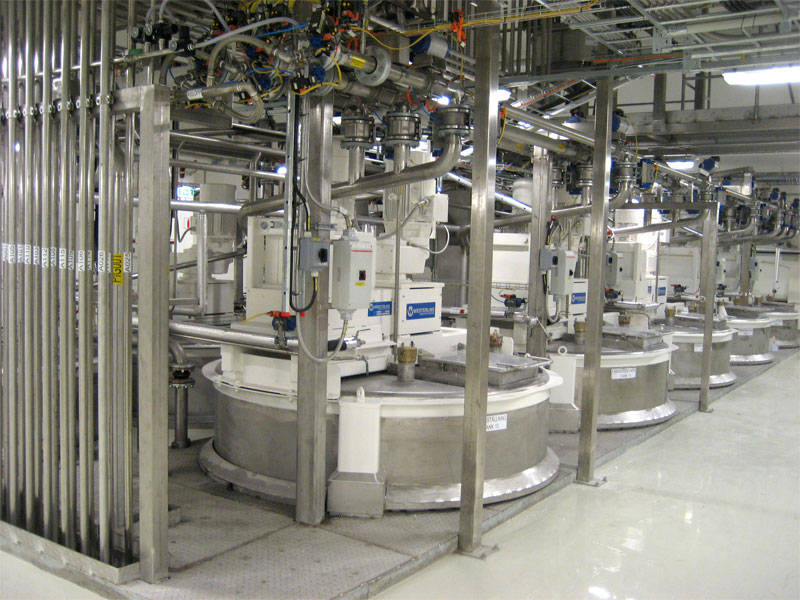
Starting as Sweden’s first specialized paint and varnish shop in 1865, Alcro-Beckers is now known worldwide for its strong brand reputation and high quality. The company was an early adopter of COBS IP telephony and DECT system, ensuring safety and security for the employees working in its demanding environment. Due to the size of the warehouses, it was important for the company that the system was mobile and that their employees were not fixed to one division.
“Taking a phone from one of the stores to the head office and getting it to work without having to enter it twice in the system is a clear advantage,” says Erik Nyman, system administrator at Alcro-Beckers.
Read more about this case here: Alcro-Beckers chose COBS comprehensive solution.
Lone Worker Protection – Frequently Asked Questions
-
What is a lone worker device?
-
Do we need an app or a dedicated device?
-
How much does a lone worker device cost?
-
What is a man-down alarm and how does it work?
-
What is a running alarm and how does it work?
-
Do you offer intrinsically safe (ATEX) lone worker devices?
-
How is precise locationing handled indoors?
-
Can lone worker alarms be monitored 24/7?